I have been rebuilding a lot of High Security Ignitions lately, so let’s have a discussion about that.
The ignitions that I have seen that cause the most problems recently in my area of Butte County here in Chico Ca. are the following:
- Honda High Security Ignition that has been around for over 25 years now
- New Chevrolet and GM High Security center cut blade.
- Ford’s new High Security side cut key and newer P series center cut key
Note, Honda has a new HS steel key that is side cut, and I haven’t seen any problems with those yet, and we likely won’t see many because those cars. They only have 1 door lock, and they are push button start cars (Proximity key fobs) so the locks won’t get much use.
The Problem:
The Ignition (and door locks for older Hondas) fail and stop turning when the key is inserted.
The Solution:
Re-key or Re-tumble the Ignition and cut a new key (too the original vehicles key code). This requires taking the lock apart and replacing the damaged tumblers inside the lock.
The Cause:
It appear, that the track along the key (the cut part) collects dirt, dust, grime, etc., and that’s the part the tumblers run along and need to line up with to get the lock cylinder to turn. So, when you are using a “Dirty key” or a worn-down key (more common with Hondas) it damages the tumblers over time.
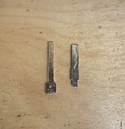 |  |  |
For reference, above are pictures of High Security key blades and tumblers. From right to left we have a Ford Side Cut, Jeep center cut, and Honda outside cut key key. Next to that, from left to right we have a standard key full size wafer, a Honda Split wafer, and a High Security full size wafer. It’s our experience that the “Half wafer” wears down much quicker than the others, because there is a much smaller area the key rides along. The half wafer pictured above in the center of the right photo is one that failed because the nub on the right side that needs to catch the key is sow warn down you can hardly even notice it is there. The nub on the left is what pushes against the spring inside the lock. As you can see, there isn’t much metal there on the right even on new wafers, so when that small bit grinds away, the lock can no longer function with the key.
How to Fix?
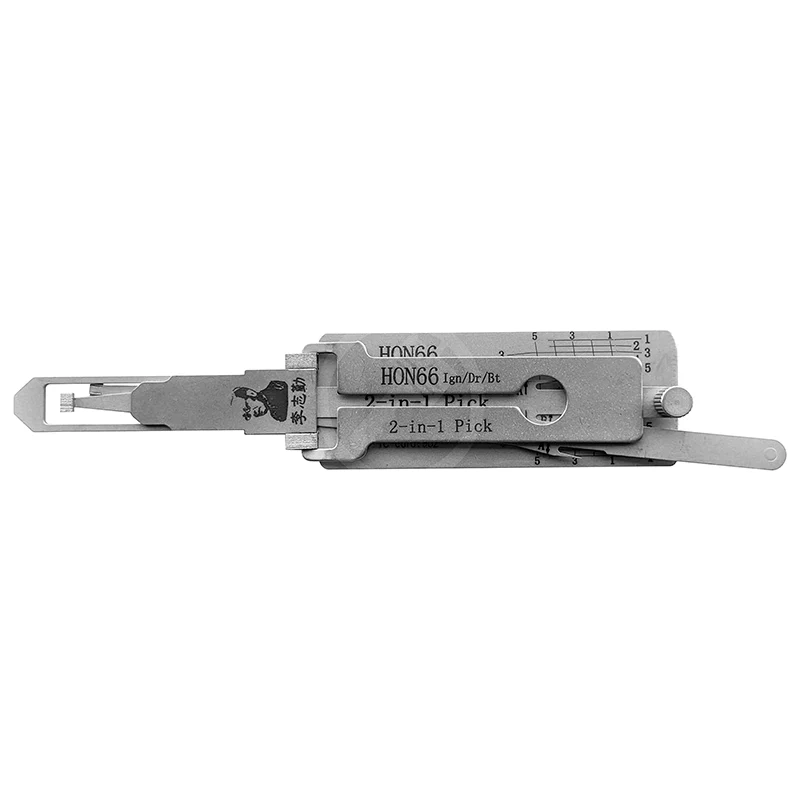
Honda’s: We need to remove the ignition. Most of the time, it’s best to turn the lock to the on position before removing the lock cylinder so the housing doesn’t lock up. This can be done sometimes with a fresh cut key (yes, the ignition should still be rebuilt even if a fresh cut key can successfully turn the ignition because it will still eventually fail), or picking the ignition over with a Lishi tool.
I use Lishi tool # HON66, here is a photo:
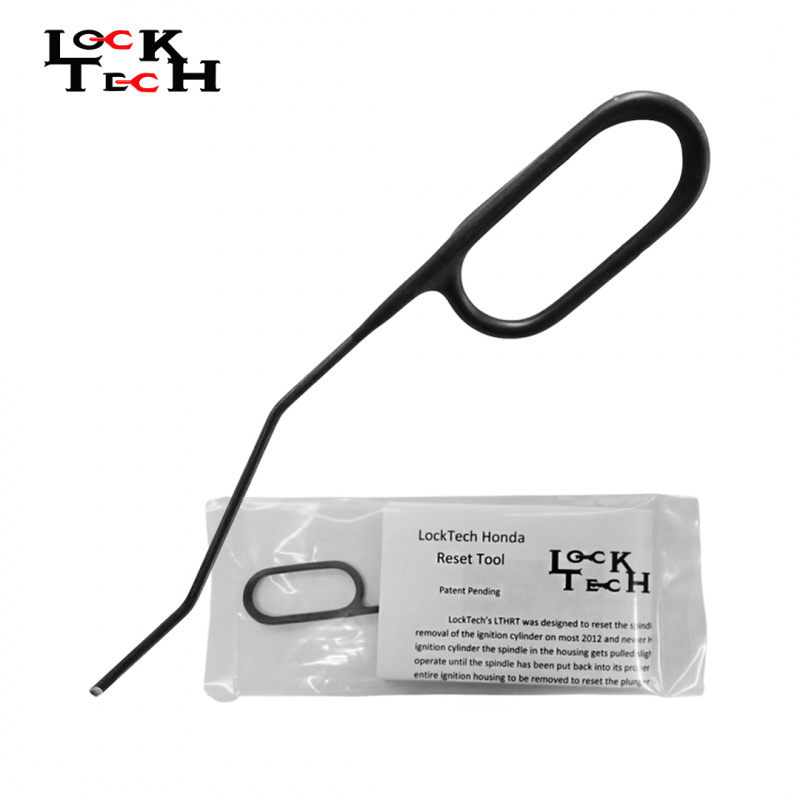
If the Ignition cannot be turned, and it’s a housing that might lock up if you pull it out in the locked position, there is a reset tool made by LockTech that works on may of these ignition housings. If not, the whole lock housing needs to be dropped and removed from the car (Tool pictured below). The part # the LockTech Honda Ignition Reset Tool for 2012+ Models (LTHRT).
Before removing the housing, disconnect the negative on the car’s 12v battery to prevent problems including blowing the main fuse if you touch the wires while removing the electric switch from the back of the housing (ask me how I know).
Removing the housing includes removing some headless bolts called “break-away” bolts that are holding a strap that in turn holds the housing to the steering column. The heads of the bolts are designed to break off when the bolt reaches the correct amount of torque. These can be a real pain to remove and there are various techniques on YouTube for this procedure. If you are interested, I prefer using a dry chisel to rotate them off. These bolts should absolutely be replaced with new bolts when remounting the housing. They can be purchased on Amazon or from your local locksmith supplier or even some automotive stores.
Note: Some are standard and some bolts are reverse hand thread. The “Strap” that holds the housing on will usually say if they are reverse handed thread. It’s printed into the strap between the break-away bolts.

ASP part # F-00-501 and the reverse thread bolt part # F-19-501
Once the ignition housing is removed from the car the ignition can be removed and if it locks up, you can take the housing apart and reset it.
I have found that you can push the steering wheel locking bolt (on the housing) all the way in while removing the cylinder in the locked position, and then turn the cam inside the housing (where the back of the lock connects) to the accessory position before releasing the locking bolt, will prevent the housing from locking up.
Once the Ignition cylinder is removed, you can break the cylinder down to its several parts and replace all of the tumblers, recut a new key to code (The Honda key code can usually be found laser printed on the side of the lock cylinder. It is the last 4 digits usually, consisting of a letter followed by 3 numbers, Example L292), and everything will work as designed if reassembled correctly. Work the key in and out several times to ensure smooth key operation.
Cutting a new key to the same key code is very important. You can reuse the chip inside the key and cut a new key shell if the electronic part of the key are in good working order. This is also a good time to replace the battery in the fob part of the key.
ASP Makes a repining kit for Honda part # A-19-108
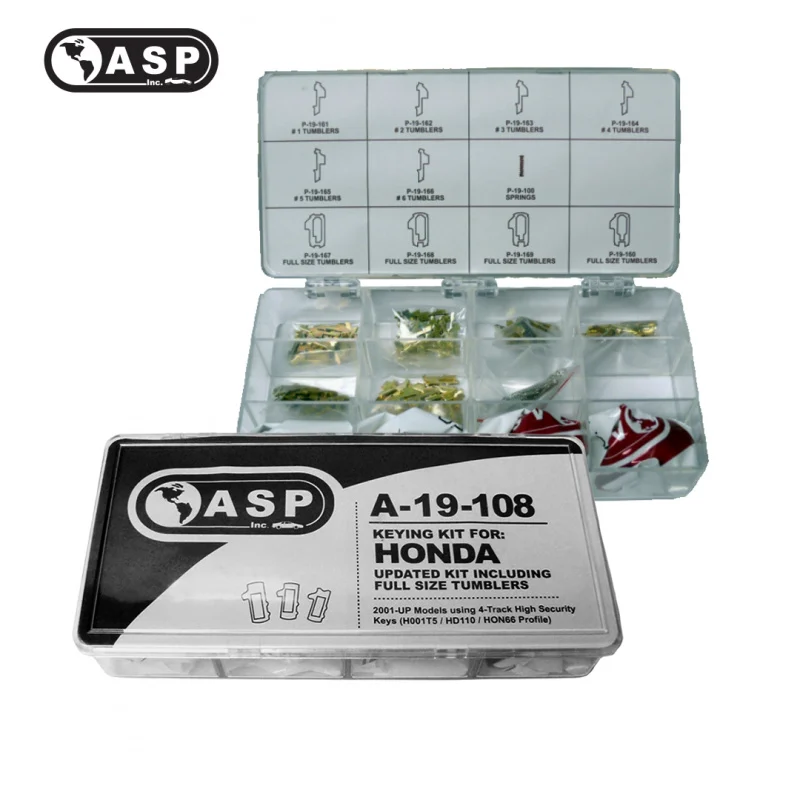
Once the lock is reassembled and the halo (antenna ring) is put back over the key hole. everything is plugged in, and negative 12v battery re-connected, the lock housing and cylinder should work well for a long time. DO NOT only replace the bad wafers, replace them all or you will be back out doing it again soon.
Chevy’s: GM Ignition products use an “active retainer” system that is used to remove the ignitions. If you rotate the ignition to the crank poison you can use a too (like a straight wire) to slide into the housing through an access hole (usually on top) down onto the ignition depressing the active retainer to release the ignition from the housing.
Obviously if the ignition is locked up you can’t rotate it to remove the lock. LockTech makes a fantastic bypass tool. I bought the whole set and have used it many times.

The LockTech tool is called the “GM HU100 Ignition Removal Tool”, pictured above and works with several different vehicles. If you are a locksmith like me who services automotive ignitions, I can’t stress to you enough how good these tools are. they cost between $150 and $200 depending on who you purchase them from and they will more than pay for themselves after your first service call using them.
To use the tool, simply pop the clam shell off of the steering column and follow the instructions. The tool can reach the active retainer and release the ignition without having to turn the lock cylinder.
NOTE: before re-inserting the lock plug into the housing after repairs have been done you will need to use the tool to rotate the cam inside the housing to get the lock and housing aligned, or the plug will not go all the way in because the lock needs be turned with the key before re-inserting the plug into the housing. This is called “Timing” and you can look into the housing and see what position to turn the lock to in order to get everything lined up.
Once you have the lock out, cut a new key and replace all the tumblers. The lock code is also usually printed on the lock plug housing though it can be hard to read sometimes. If you use the bypass tool the end of the lock will stay in the housing, and you can remove it with the tool. Disconnecting or pushing in the key buzzer button will make removing it easier. That small end part of the lock is where the lock code is stamped usually. It will look like an old dot print matrix printer font. Using a marker or dirty grease over the code and quickly wiping the excess away will help you read the code easier.
NOTE” there are left and right wafers. Like the Honda split wafers, there is a right and left side of the plug. The numbers should be printed on the wafers so just replace what you pull. Example 1L is 1 left, and 2R is 2 right. If the wafer size is 3 and you can’t read the wafer and use the wrong handing, the key will not go in, or the wafer will not line up flush with the plug when the key is inserted, but this is an easy fix by swapping out the handing of the wafer in that spot. When you replace all the wafers and insert the new fresh cut key, they should lay flush on both side of the plug allowing the plug to turn inside the plug housing.
Once you get everything back together, it should work well for a long time. Ask the customer to try to keep the key blade clean and not to hang too many things off the key. The weight does cause the ignition to fail faster. I have seen this a lot in commercial truck fleets, its not just an old wives tale. Chevy/GM has started making keys with a “center hole” design. The hole where you place a key ring is ovel on older style keys, and a smaller hole in the center on new designed keys. The idea is the center hole design will help combat ignition ware when the customer “overloads” the key ring.
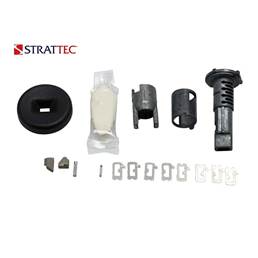
You can purchase a GM ignition service pack from Strattec part # 7024124 (photo below) that comes with everything you need to replace or repair a side mill ignition.
Ford: Like GM and Stellantis ignitions ford uses an active retainer. Out of all of the new High Security ignitions I have found most Ford H.S. Ignition’s to be the easiest to rebuild. This is because they use a clip that you can pop off and the tumbler comes right now. You will need to remove the clamshell around the steering column and the halo (antenna ring) to get to the clip. Once removed, you can then depress the active retainer to remove the plug housing, or even just re-tumble the plug and put it back together (with a new cut key) just as it was removed.
Pry the clip up and off by starting from the front (towards the motor) and it will pop out a lot easier.
I prefer to remove the plug housing after removing the plug, as it is quick and easy, and makes reassembly smother. With the plug removed there is nothing blocking the active retainer so it pops right out once the button is depressed. Like the other ignitions you will want to rotate the cam inside the housing so you have proper timing when you go to reinstall the repaired ignition.
Like GM H.S. ignition’s you will find left- and right-handed wafers in this lock.
Stellantis has a High Security key also, that is the same as the Pro-Max and Fiat 500. They are using it on the Jeep wrangler’s proximity flip key for example. I have not yet had any problems with these, mostly for the same reason Honda’s new design is working well. The Jeeps have a push to start button ignition and most people use the remote to unlock the door so the only lock on most Jeeps that is the one on the driver’s door, and it doesn’t get used a lot. Also, as a bonus, the blade is center cut and tucks away into the key when not used. This design seems to keep the key blade clear of debris and will result in less problems with the lock system.
You can purchase an uncoded Ford side mill ignition service pack that comes with all the parts needed to replace or repair your damaged ignition from Strattec part # 5936813. In the photo below you can see the “C” clip mentioned above and the active retainer on the top of the plug housing.

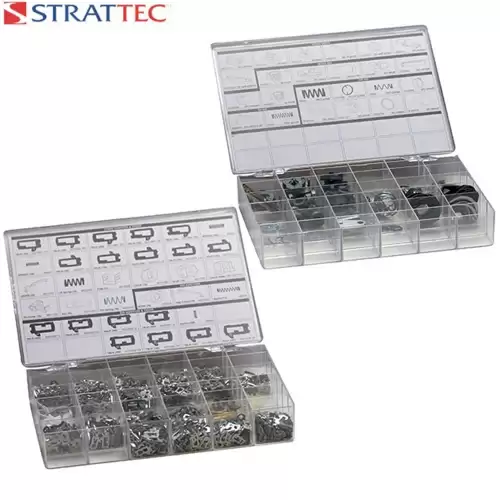
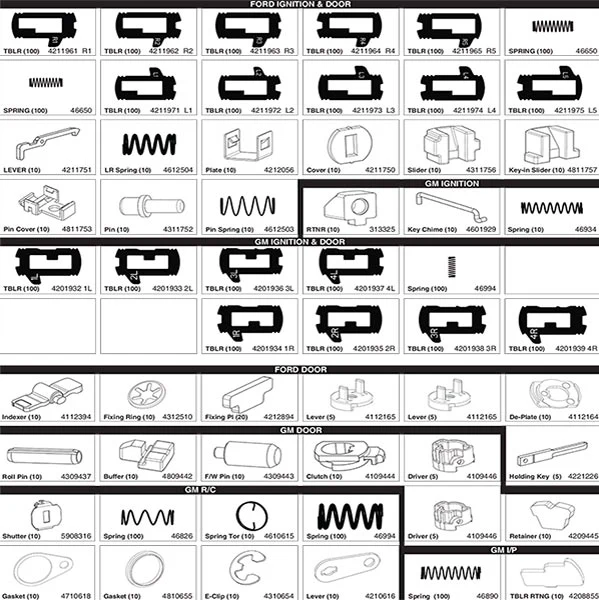
I can also recommend the Strattec “2010-2021 GM / Ford – Side Mill – High Security Tumbler Service Pinning Kit” pictured below. The part # is 7023068. It comes in 2 parts but honestly, I have never used the second kit, I have only ever needed the one with the replacement wafers.
 |  |
Honorable mention
Toyota/Lexus: have been using H.S. style ignition’s for about 30 years without all of the problems the American market seems to be having. This is likely because most of the ignition’s I rebuild are work trucks that are in dirty and dusty work conditions and Toyota’s superior design over Honda’s. Honda uses split wafers while Toyota usually does not. There are older Toyotas that used split wafers in 2 chambers and full-size wafers in the rest of the lock. We have rebuilt many of those ignition’s and it’s always the split wafers that fail. You can buy a Toyota pin kit what replaces the split wafers with full size wafters, photo below. ASP Part # A-30-117
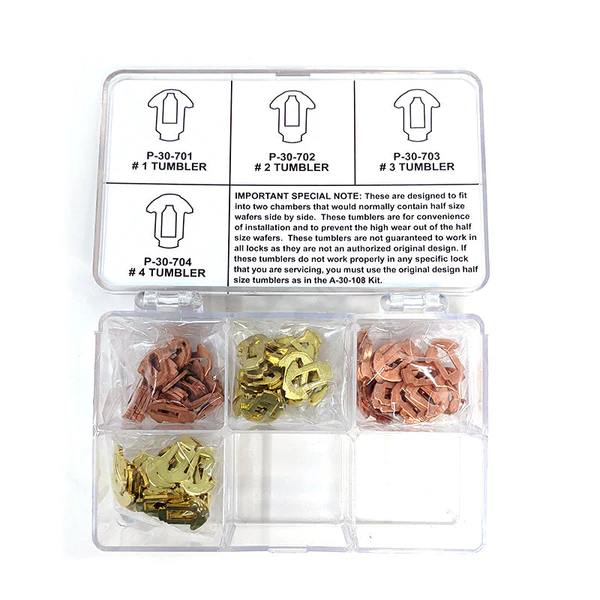
I suggest doing this rather than what many locksmiths do, a technique known as “Pulling Toyota’s wisdom teeth” this involves removing the split wafers from the 2 chambers and not replacing them with anything so it won’t lock up again. The problem with this process is that it leaves the vehicle less secure where more key combinations will be able to turn the lock, and will be easier to pick over, but also, the key will sometimes fall out of the lock while driving down the road if the wafers removed were helping to retain the key in the lock when the plug is turned.
Alternatively, you can simply replace the ignition with a new one, and they will have a different key for the ignition than the doors but the lock will be new, and not worn out as most of these “2 chamber split wafer” ignitions are on older vehicles with a lot of miles. The replacement locks are usually very affordable at about $50, and the hardest part is getting the old lock to turn to depress the active retainer and remove the failed lock. I find cutting a fresh key to code and inserting the key, and than thumping or wrapping on the head of the key several times (I use a screwdriver and smack the key with the handle while holding the blade) can vibrate the split wafers into place allowing the key to turn. If you can’t get the key to turn, you can drill out the active retainer on the bottom side of the lock housing, but don’t damage the housing and note that this is often a hardened steel pin that will spin on you so drilling it out can be challenging and I only recommend this as a last result.
I have started to see some newer Toyota Corolla High Security flip key ignitions fail. Why these are failing at a higher rate than other Toyotas or Jeeps with a similar flip key design I am not sure, but I have noticed that every time, the key’s center cut blade was full of debris. This is what I believe is leading to the ignition lock cylinder becoming damage.
Summary:
When you remove the locks and examine the timbers you can visually see they are worn down, and it’s the key that is doing the damage most of the time. Most vehicle manufactures are going to keyless ignition with a push button start so these problems will not be as wide spread as the older Hondas and explains why most of the rebuilds I have done are large trucks from a fleet (they still have turn key ignitions and get used a lot in dirty conditions).
These keys are almost always (with little exception) transponder systems, meaning there are chips in the keys, so when you cut a new key, if you don’t recycle the chip into the new cut key, you will need to program a new one to the vehicle before it will start.
I hope this helps, and if you have a vehicle with a failed or failing ignition in the Chico California area, give us a call. We are a mobile service and I can come out to you and do the repairs on site.
Have a great day, and thanks for reading.